
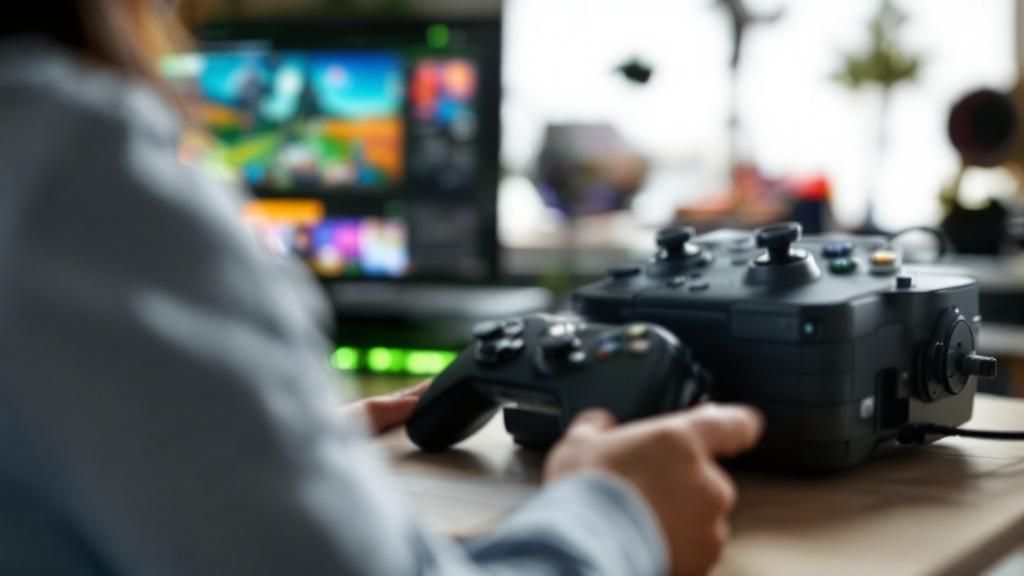
Gaming has long been a cherished form of leisure, yet numerous disabled individuals have faced significant barriers to participation. Microsoft’s Xbox platform has dramatically reshaped this landscape through groundbreaking inclusive technologies, enabling gamers with different impairments to experience interactive entertainment without limitation. From customisable controllers to assistive innovations and inclusive design, Xbox shows that gaming doesn’t have to shut out anyone. This article explores how these cutting-edge capabilities are removing obstacles and empowering disabled gamers to completely participate with the worlds they enjoy.
Adaptive Controllers and Input Customisation
The Xbox Adaptive Controller constitutes a revolutionary breakthrough in gaming accessibility, purpose-built for gamers with limited mobility or coordination difficulties. This advanced system features remappable button configurations, configurable input sensitivity, and interchangeable parts that users can set up to match their specific circumstances. Players can reconfigure input mappings, adjust button responsiveness, and link supplementary control interfaces, transforming the gaming experience into something truly customised and accessible.
Beyond dedicated adaptive hardware, Xbox offers extensive control customisation settings across its entire platform. Gamers can adjust button configurations, assign functions to various input devices, and fine-tune analogue stick responsiveness to accommodate their individual needs. These settings persist throughout multiple titles, eliminating the frustration of reconfiguring controls time and again. Whether employing conventional gamepads, custom equipment, or alternative input methods, Xbox’s flexible architecture ensures all players can discover a control scheme that works perfectly for them.
Voice commands and eye-tracking technology additionally enhance inclusive gaming options on Xbox platforms. Players can browse menu options, start titles, and perform gameplay functions using voice recognition, whilst eye-tracking enables control through eye movements alone. These hands-free alternatives prove invaluable for gamers with severe mobility restrictions, offering genuine autonomy and autonomy throughout play.
The commitment to input customisation extends to menus for accessibility designed with clarity and simplicity in mind. Users navigate uncomplicated interfaces with minimal complexity, whilst detailed guides guide players through configuration processes. Xbox’s dedication to user-friendly design ensures that customising controls remains easy to access, reducing barriers that might otherwise discourage disabled gamers seeking to improve their experience.
Sight and Sound Accessibility Options
Xbox’s comprehensive visual and audio accessibility features guarantees that gamers with sight and hearing disabilities can completely experience their preferred titles. These deliberately developed features acknowledge that audio and visual experiences represent the core of contemporary gaming, yet standard designs regularly overlook players with disabilities. By providing customisable options for colour perception, contrast levels, and auditory access, Xbox equips users to adjust their gaming setup to their individual requirements, ensuring no one is overlooked.
Colour Blind Modes and Enhanced Contrast Features
Colour blindness affects millions globally, yet many games rely heavily on colour differentiation for gameplay mechanics and narrative elements. Xbox’s colour blind modes address this issue by offering multiple filter choices tailored to different types of colour vision deficiency, including deuteranopia, protanopia, and tritanopia. These filters adjust on-screen colours to improve visual distinction and readability, enabling colour blind gamers to perceive visual information as designed by developers.
Beyond visual perception adjustments, Xbox’s high contrast settings provide essential support for players with low vision or light sensitivity. These settings enhance visual distinctions between game elements, improve text readability, and minimise eye strain during extended gaming sessions. Users can adjust contrast levels independently, enabling customised configurations that suit their specific vision needs and preferences precisely.
Subtitles and Audio Description Options
Subtitles serve as far considerably beyond simple dialogue transcription for deaf and hard of hearing gamers. Xbox’s subtitle system features detailed speaker labels, sound effect descriptions, and spatial sound indicators displayed in text format. This comprehensive system ensures that deaf and hard of hearing gamers obtain complete story and setting details, preserving the immersive storytelling experience that sighted, hearing gamers enjoy throughout their gameplay.
Audio descriptions deliver an extra level of accessibility for visually impaired players, describing important visual information, environmental details, and character actions across the game. These descriptions are carefully integrated to support without interrupt gameplay, enabling blind and low vision gamers to understand what’s happening on screen in their entirety. Paired with Xbox’s accessibility tools, audio descriptions establish a multisensory experience that maintains engagement and enjoyment.
Cognitive Support and Navigation Assistance
Intuitive Menu Navigation
Xbox’s straightforward menu structures constitute a significant advancement for gamers with cognitive impairments. The platform delivers adjustable menu controls that reduce cognitive load, permitting players to find functions more naturally. Users can rearrange menu layouts in line with their preferences, stripping away excess content and prioritising commonly accessed features. These adjustments ensure that individuals with disorders influencing memory or processing speed can use the platform confidently without facing frustration or disorientation.
The Xbox system menu includes text-to-speech functionality integrated throughout the system, delivering audio guidance for navigating menus and configuration changes. This feature becomes essential for players with dyslexia or visual processing difficulties. By combining visual and auditory cues, Xbox creates various routes for understanding content. Players can customise speech rate and volume to match their personal preferences, guaranteeing directional support improves without compromising their play sessions and satisfaction.
In-Game Mental Support Tools
Many Xbox titles incorporate built-in cognitive support features that support players while playing. Adjustable difficulty settings surpass standard difficulty modes, enabling players to customise particular mental requirements such as time pressure or multitasking requirements. Games allow pausing at any time without penalty, catering to those who need processing time between actions. These options ensure that cognitive disabilities do not hinder engagement with compelling narratives and immersive gameplay.
Xbox’s subtitle and captioning systems reach well past dialogue, offering contextual context about in-game events and ambient audio. Enhanced visual indicators emphasise key objectives and waypoints, minimising reliance on memory recall. Some titles include adjustable interface elements that can be enlarged or moved for improved visibility. These thorough cognitive aids showcase Microsoft’s pledge to ensuring that every player, regardless of cognitive ability, can fully take part in and appreciate their gaming experiences.
Individual Access Profiles
The Xbox Accessibility Profile feature enables players to save personalised configurations across their entire gaming library. Once set up, these preferences are applied automatically to compatible games, eliminating the need to readjust settings repeatedly. Players can establish several profiles for various gaming situations and preferences, moving between them with ease. This personalisation approach acknowledges that cognitive assistance requirements vary between individuals and even across different play sessions, offering adaptability that genuinely serves varied player needs.
Xbox’s cloud-powered accessibility options sync across multiple devices, guaranteeing reliable support whether playing on console, PC, or mobile. This seamless integration means gamers never lose their carefully configured accessibility preferences. The system continuously evolves as developers add enhanced cognitive assistance features to their games. By centralising accessibility management, Xbox empowers disabled gamers to keep control over their gaming environment, promoting independence and confidence whilst experiencing the interactive entertainment they love.
